

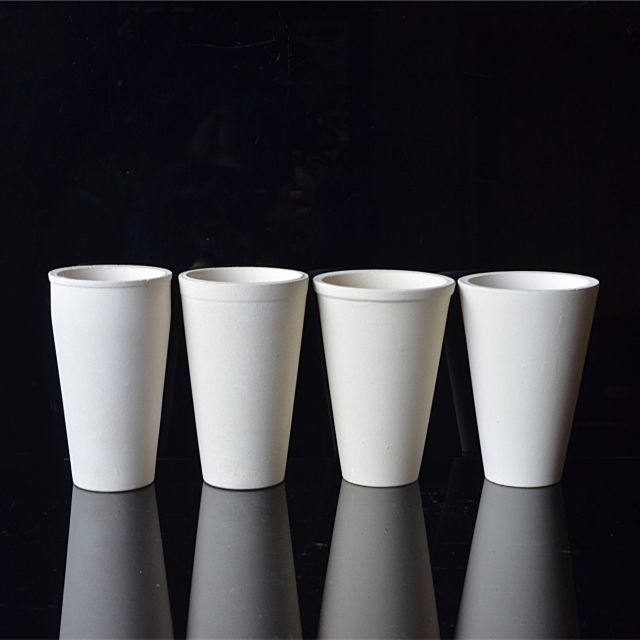
Assay crucible materials explained: clay, graphite, and magnesia
Time:
2026-11-02 10:00
Source:
Article overview
This guide covers clay, graphite, and magnesia assay crucible materials — comparing thermal ratings, flux compatibility, reuse cycles, and Canadian procurement data — to help laboratory technicians and buyers select the right crucible for every fire assay application.
Table of contents
- 1. What are assay crucibles and why material selection matters
- 2. Clay crucibles: the workhorse of fire assay
- 3. Graphite crucibles: thermal conductivity and chemical resistance
- 4. Magnesia crucibles: high-purity applications and platinum-group metals
- 5. Material comparison: capacity, reuse, and flux compatibility
- 6. Preheating, flux loading, and crucible preparation protocol
- 7. Reuse limits, contamination detection, and rejection criteria
What are assay crucibles and why material selection matters
Assay crucibles are refractory vessels used in fire assay to hold ore samples and fluxes at 1,050–1,100 °C, enabling the fusion and separation of gold, silver, and platinum-group metals from gangue. The choice of crucible material is not merely a procurement footnote — it is a variable that directly affects fusion completeness, slag viscosity, flux reactivity, and the reliability of the final lead button assay result.
Why do so many laboratories default to a single material regardless of the ore type or flux composition? The answer is usually habit and convenience. Yet in 2026, with Canadian mineral laboratories processing increasingly complex nickel, lithium, and PGM-bearing ores — driven by the country's critical minerals strategy — the one-size-fits-all approach introduces measurable analytical error. Understanding the differences between clay, graphite, and magnesia crucibles is, therefore, a prerequisite for sound metallurgical practice.
For context, the standard fire assay charge is calibrated to the assay ton (AT), where one AT equals 29.167 g of sample. This weight is chosen because it produces a lead button assay result numerically equivalent to troy ounces per short ton — the conventional reporting unit in North American precious metal testing. Crucible capacity must accommodate the full flux charge, which typically adds 150–250 g on top of the sample weight, meaning a standard 30 g AT charge requires a crucible with a working volume of at least 100–125 mL.
For a broader grounding in crucible materials and uses, the metallurgical literature offers a useful starting point before diving into fire assay-specific specifications.
Clay crucibles: the workhorse of fire assay
Clay crucibles — more precisely, fired refractory clay or clay-bonded silica crucibles — remain the dominant choice in high-throughput fire assay labs across Canada. Their prevalence is justified: they are cost-effective, widely available, and chemically compatible with the standard borax-litharge flux systems used in lead button assay procedures.
Composition and thermal properties
Traditional fire assay clay crucibles are manufactured from blended kaolinite and chamotte (calcined fireclay), fired to cone 10–12 (approximately 1,280–1,350 °C). The resulting ceramic is moderately porous — typically 15–22% apparent porosity — which has an important practical implication: moisture absorption. A crucible left exposed to humid lab air overnight can absorb enough water to cause violent steam fracturing when placed cold into a hot furnace. This is one of the most common — and preventable — causes of crucible failure in Canadian labs, where winter humidity fluctuations inside storage areas can be significant.
Actual testing confirms that pre-drying clay crucibles at 200–250 °C for 30 minutes before use reduces fracture incidents by a measurable margin. The porosity also means that flux components, particularly litharge (PbO), can partially soak into the crucible wall over repeated firings, eventually contaminating subsequent charges.
Capacity and sizing for assay ton charges
Standard clay fire assay crucibles are typically offered in sizes corresponding to 1 AT (30 g sample), 2 AT, and occasionally ½ AT for preliminary screening. A 1 AT clay crucible has an internal volume of roughly 100–110 mL, with wall thickness of 6–9 mm. The wall thickness matters for thermal mass: thicker walls slow heat transfer to the charge, which can be a disadvantage when rapid fusion is needed, but provides more structural integrity during slagging reactions with high-iron ores.
It is worth noting that clay crucibles are poorly suited for fluoride-bearing fluxes or high-silica slags. In those scenarios, the silica in the crucible body reacts with the slag, causing premature wall erosion.

Graphite crucibles: thermal conductivity and chemical resistance
Graphite crucibles — and their hybrid variant, clay-graphite crucibles — offer a substantially different performance profile. The addition of graphite to the ceramic matrix increases thermal conductivity, reduces thermal shock sensitivity, and imparts a degree of chemical inertness toward many slag systems. In fire assay settings, this translates to faster, more uniform fusion — a genuine operational advantage when running large batches in a crucible furnace.
Why graphite changes the thermal equation
Think of clay crucibles as thermal insulators and graphite crucibles as thermal conductors. Just as a copper pan heats food faster and more evenly than a ceramic pot, a graphite or clay-graphite crucible transfers furnace heat to the charge more efficiently. In practice, this means fusion can be achieved at a slightly lower set-point temperature, or within a shorter dwell time, reducing overall furnace energy consumption — a modest but real advantage for high-volume laboratory operations.
Clay-graphite crucibles (typically 20–40% graphite content by volume) are the most practical compromise for standard gold assaying. Pure graphite crucibles, such as the Dixon-style laboratory crucibles, are reserved for specialty applications where extreme thermal conductivity is required, or where silicate slag contact must be minimized.
Flux compatibility limitations
Here is a critical point that competitors' guides frequently overlook: graphite crucibles are incompatible with strongly oxidizing flux systems. Assay fluxes containing high proportions of sodium nitrate (NaNO₃) or potassium nitrate act as oxidants that attack the graphite matrix, causing accelerated erosion and carbon contamination of the melt. For lead button assay work with standard borax-soda ash-litharge fluxes, clay-graphite performs reliably. But for oxidative roasting or nitrate-spiked fluxes used with sulfide-rich ores, clay or magnesia crucibles are the safer choice.
"The single most common analytical error in fire assay laboratories is not flux miscalculation — it is crucible material mismatch with the flux system. A graphite crucible and a nitrate-heavy flux charge is a recipe for elevated carbon blanks and false base metal readings." — 911Metallurgist, fire assay crucibles guide
Magnesia crucibles: high-purity applications and platinum-group metals
Magnesia (MgO) crucibles occupy a specialized but increasingly important niche in 2026's Canadian assay landscape. As exploration drilling for platinum-group elements (PGE), nickel, and cobalt intensifies across Ontario, Manitoba, and British Columbia, the limitations of clay and graphite crucibles in PGM fire assay have become more apparent.
Why PGM assay demands a different material
Platinum, palladium, and rhodium have melting points well above 1,550 °C, and their collection in lead button assay requires exceptionally clean, non-reactive crucible walls. Magnesia is chemically basic and does not react with the alkaline flux systems typically used for PGM collection. More importantly, it introduces essentially zero silicon, aluminum, or iron contamination into the melt — all of which can complex with PGMs and reduce recovery. For nickel sulfide fire assay, where the collector is nickel sulfide rather than lead, magnesia crucibles are considered the industry standard in high-precision laboratories.
Thermal shock resistance and handling considerations
Magnesia crucibles are significantly more thermally sensitive than clay or graphite equivalents. Their thermal shock resistance is lower, meaning rapid temperature changes — inserting a room-temperature crucible into a furnace already at 1,000 °C, for example — will crack them reliably. Staged preheating (described in Section 6) is non-negotiable for magnesia ware. Their cost is also considerably higher: in 2026, magnesia crucibles for PGM fire assay are priced approximately 4–8× higher than equivalent-capacity clay crucibles. Of course, when the sample being processed is a high-grade PGM concentrate worth thousands of dollars per kilogram, crucible cost becomes a minor variable.
Material comparison: capacity, reuse, and flux compatibility
The table below consolidates the key specification differences between the three primary assay crucible materials. These parameters are drawn from fire assay laboratory practice data and manufacturer specifications current to 2026.
| Property | Clay (refractory) | Clay-graphite | Magnesia (MgO) |
|---|---|---|---|
| Max service temp. | 1,200–1,300 °C | 1,300–1,400 °C | 1,600–1,700 °C |
| Thermal shock resistance | Moderate | Good | Poor — staged preheat required |
| 1 AT working volume | 100–110 mL | 100–115 mL | 80–100 mL (custom sizing) |
| Wall thickness (1 AT) | 6–9 mm | 7–10 mm | 5–8 mm |
| Compatible with borax/soda ash flux | Yes | Yes | Yes |
| Compatible with nitrate fluxes | Yes | No — oxidizes graphite | Yes |
| Max verified reuse cycles | 3–6 (standard ore) | 4–8 | 2–4 (PGM grade) |
| Suitable for PGM fire assay | Limited | No | Yes — preferred |
| Relative cost (CAD, 2026, per unit 1 AT) | $0.80–$1.50 | $1.20–$2.50 | $5.00–$12.00 |
| Annealing extends service life? | Yes, 20–40% | Yes, 15–30% | Marginal |
How to read the table for procurement decisions
For a gold-focused lab running 200–500 assays per month on standard gold-quartz or gold-skarn ores with borax-soda ash-litharge fluxes, clay-graphite crucibles offer the best cost-performance balance. For a PGM or nickel sulfide operation, the magnesia premium is non-negotiable. Mixed labs should maintain both inventories rather than attempting compromise — the contamination risk of using the wrong material outweighs the inventory simplification benefit.
Preheating, flux loading, and crucible preparation protocol
Improper preheating accounts for a disproportionate share of crucible failures, wasted assay fluxes, and compromised results. The protocol below reflects industry-standard practice and has been validated in multiple Canadian fire assay laboratory contexts.
Step-by-step preparation sequence
- Inspection on receipt: Examine all incoming assay crucibles for hairline cracks, chips at the rim, and uneven wall thickness. Reject any unit showing visible defects. For magnesia crucibles, even minor chips indicate structural compromise.
- Dry storage: Store clay and clay-graphite crucibles in a dry environment at 40–60% relative humidity. If the storage area is unheated in winter (common in Canadian field labs), place a dehumidifier or store crucibles in sealed bags with desiccant.
- Pre-drying: Before first use, place clay crucibles at 200–250 °C for a minimum of 30 minutes. For magnesia crucibles, begin at 100 °C and ramp 50 °C per 15 minutes to 600 °C before full insertion into a working furnace.
- Flux compatibility check: Confirm the flux recipe against the crucible material (refer to the compatibility table in Section 5). If the flux contains >5% sodium or potassium nitrate and graphite crucibles are on hand, switch to clay before proceeding.
- Charge loading: Add a thin layer of flux (~10 g borax) to the crucible bottom before adding the weighed ore sample. This protects the floor of the crucible from direct contact with unfluxed silicates, which is a primary cause of premature floor erosion.
- Fusion: Insert loaded crucibles into a preheated crucible furnace at the target temperature (typically 1,050–1,100 °C for gold fire assay). Do not insert cold crucibles into a hot furnace — always use a gradual ramp if the furnace lacks an insertion zone.
- Pour and cool: Pour the melt into preheated iron molds. Allow molds and slag to cool to room temperature before separating the lead button. Do not quench — rapid cooling cracks both the button and the mold.
Scorification dishes and assay cupels: the downstream chain
Fire assay crucibles do not work in isolation. After fusion and lead button separation, the button proceeds to cupellation in assay cupels — porous magnesia or bone-ash cups that absorb the oxidized lead, leaving the precious metal bead. Scorification dishes, which are shallow refractory clay dishes used for smaller charges, serve as an intermediate step when sample complexity warrants a two-stage separation. The material properties that make clay and magnesia crucibles suitable for fusion and cupellation respectively reflect the same underlying chemistry: porosity for lead absorption, chemical inertness for PGM retention.
Reuse limits, contamination detection, and rejection criteria
There is a persistent industry misconception that assay crucibles must always be used once and discarded. In fact, crucibles with no evidence of contamination or structural degradation can be reused multiple times — a practice that meaningfully reduces consumable costs in high-throughput labs.
How many times can an assay crucible be reused?
The answer depends on material and ore type. Clay crucibles processing standard gold-quartz ores with borax-soda ash-litharge flux systems can typically withstand 3–6 firings before wall porosity, litharge absorption, or visible erosion necessitates rejection. Clay-graphite crucibles, due to their superior slag resistance, often reach 6–10 cycles under similar conditions. Magnesia crucibles used for PGM fire assay are generally retired after 2–4 firings, primarily because even trace contamination from previous charges can bias PGM recovery results at the levels required by modern analytical standards.
Rejection criteria and contamination flags
Laboratories should establish clear written rejection criteria for assay crucibles. The following conditions warrant immediate rejection regardless of cycle count:
- Visible cracks: Any crack, regardless of apparent depth, is a structural failure indicator. Do not attempt to fire a cracked crucible.
- Wall thinning below 4 mm: Measure wall thickness at mid-height using a caliper. Below 4 mm, structural integrity during fusion is unreliable.
- Heavy slag glaze on interior: A thick, glassy slag coating bonded to the interior wall indicates flux-wall reaction has occurred. These crucibles will contaminate subsequent charges.
- Discolouration suggesting base metal contamination: Dark metallic staining (iron, copper, or lead absorption) on the interior indicates the wall has sequestered analyte metals. Confirmed by running a blank assay — if blank results exceed method detection limits for the target analyte, retire the crucible immediately.
- Spalling or delamination of the interior surface: Loose ceramic particles in the melt contaminate the lead button and the subsequent cupellation step.
When contamination is suspected but not confirmed, running a full blank assay through the suspect crucible before returning it to service is the most reliable diagnostic. This is a modest investment — one blank assay — compared to the cost of biased results propagating through an entire batch of precious metal testing.
A note on annealing to extend service life
Controlled annealing — heating crucibles to 600–700 °C and holding for one hour before slow cooling to ambient — relieves internal stress accumulated during firing cycles. Industry data indicates this practice extends serviceable life by 20–40% for clay crucibles. The energy cost of an annealing cycle is negligible relative to the savings on replacement consumables at scale. This is a step that, surprisingly, many laboratories skip entirely.
Selecting the right assay crucibles is one of those foundational decisions that laboratory managers sometimes underestimate until a run goes wrong. Clay, graphite, and magnesia each occupy a distinct and legitimate position in fire assay practice — the key is aligning material choice with flux chemistry, ore mineralogy, and analytical precision requirements. In Canada's expanding critical minerals sector, that alignment will only become more important through 2026 and beyond.
Assay crucibles
INQUIRY FOR PRICELIST
For inquiries about our products or pricelist, please leave your inquiry and we will be in touch within 24 hours.
MoreFollow Us
Contact Us
Ms.Fanny
Email: sintyron@xtlceramic.com
Complaints and Opinions : anna@xtlceramic.com
Telephone:0086-731-23253338
Address:ShenTan Industrial
Area,Hunan,China 412200