

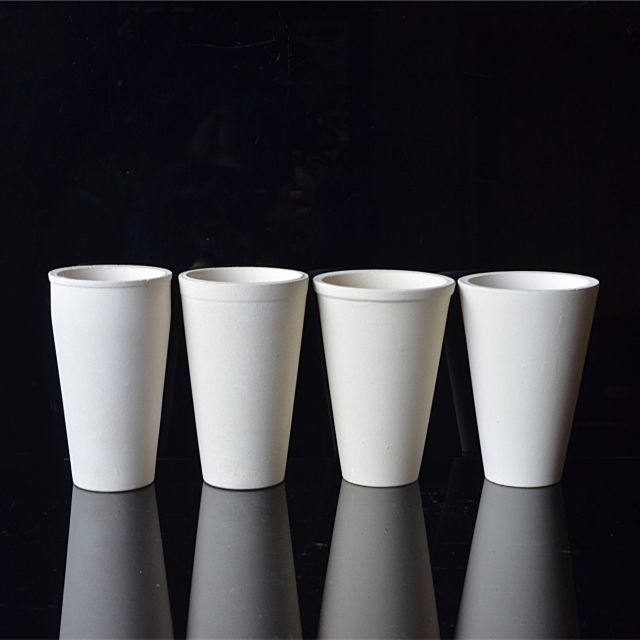
What is crucible fire assay? A complete beginner's guide to gold testing
Time:
2026-10-31 10:00
Source:
Article overview
This guide covers what crucible fire assay is, how the procedure works end-to-end, crucible material comparisons, Canadian lab pricing and accreditation, ore-specific flux recipes for Ontario, Quebec, and Yukon, QA/QC protocols, and provincial hazardous waste rules — everything a Canadian mining assayer or exploration geologist needs in one place.
Table of contents
- 1. What is crucible fire assay and why does it matter for gold testing?
- 2. How the crucible fire assay procedure works: step by step
- 3. Crucible types and specifications: choosing the right one
- 4. Canadian fire assay laboratory services: costs, turnaround, and accreditation
- 5. Flux composition, ore-specific challenges, and Canadian mining districts
- 6. Accuracy, detection limits, and QA/QC best practices
- 7. Lead safety, ventilation, and hazardous waste disposal in Canada
- 8. Frequently asked questions
What is crucible fire assay and why does it matter for gold testing?
Crucible fire assay is a gravimetric analytical method in which a crushed ore sample is fused with a lead-based flux inside a high-temperature crucible, allowing molten lead to collect gold and silver, which are then separated and weighed after cupellation. It is the reference technique against which every other gold testing method is benchmarked.
The method is ancient — assay offices in medieval Europe used versions of it to certify coinage — yet it remains the industry standard in 2026 precisely because nothing else matches its combination of sensitivity and reliability at scale. For Canadian mining operations generating hundreds of samples per week, the fire assay process delivers gold values down to single-digit parts per billion (ppb), a threshold no portable XRF instrument can consistently achieve.
Why does this matter commercially? Canada is the world's fifth-largest gold producer, with the mining sector contributing roughly CAD $47 billion in annual revenue. A resource estimate that misrepresents gold grade by even 0.1 g/t can shift a project's net present value by tens of millions of dollars. Crucible fire assay is the legal and technical backstop that keeps those numbers honest.
How does crucible fire assay differ from other gold testing methods?
Portable XRF, aqua regia digest, and fire assay all appear on assay certificates, but they measure fundamentally different things. XRF reads surface elemental concentrations and struggles below roughly 0.1 g/t Au. Aqua regia dissolves most gold but fails on refractory ores where gold is locked inside sulphide or arsenide minerals. Crucible fire assay melts the entire sample matrix, so no gold particle is left behind — not even those trapped in arsenopyrite or carbonaceous host rock.
Why is the crucible the critical component?
The crucible is not simply a container. It must withstand temperatures between 950 °C and 1,100 °C, resist chemical attack from aggressive flux mixtures, and maintain structural integrity through repeated thermal cycling. A crucible that fails mid-fusion contaminates the furnace, destroys the sample, and adds hours of downtime. Selecting the right crucible material is therefore a core technical decision, not an afterthought.
How the crucible fire assay procedure works: step by step
The fire assay procedure follows a logical sequence from raw ore to a weighed bead of precious metal. Each stage has defined parameters; deviating from them is the most common cause of poor reproducibility.
- Sample preparation: Crush and pulverise the ore to 85–95% passing 150 µm (–100 mesh). Split to a charge weight of 29.166 g (one assay ton, AT) or 14.583 g (half assay ton). Dry at 105 °C for at least two hours.
- Flux preparation and mixing: Weigh litharge (PbO), sodium carbonate, borax, silica, and reducing agents (flour or charcoal) according to the ore type. Mix thoroughly with the sample in the crucible.
- Fusion: Place loaded crucibles in a pre-heated muffle furnace at 850 °C. Ramp to 1,050–1,100 °C over 45–60 minutes, then hold for 20–30 minutes until the melt is fluid. The temperature ramp curve matters: too fast and the charge foams; too slow and litharge is reduced prematurely.
- Pouring: Pour the molten charge into a pre-heated cast-iron mould. Slag floats; the lead button sinks. Cool, separate button from slag, and hammer to remove adhering slag.
- Cupellation: Place the lead button on a pre-heated bone-ash or magnesia cupel in a cupellation furnace at 950–980 °C. Molten lead oxidises to litharge, which is absorbed into the porous cupel, leaving a small bead of gold and silver alloy. Endpoint is signalled by the "blick" — a sudden brightening as the last lead oxidises.
- Parting (inquartation): If the bead contains more than 25% gold, silver must first be added to bring the Ag:Au ratio to at least 3:1 before parting. Dissolve silver in 25–30% nitric acid (parting acid), leaving a spongy gold residue.
- Weighing: Anneal the gold residue, cool in a desiccator, and weigh on a microbalance to ±0.001 mg. Calculate gold grade in g/t: weight (mg) × 34.285 = g/t (per assay ton).
Real-world experience confirms that the most frequent failure points are Steps 3 and 5. Crucible puncture — where an over-reduced lead pool eats through the crucible floor — typically results from too much reducing agent or insufficient silica in the flux. An oversized lead button (above 35 g) at Step 4 usually means the litharge proportion was too high for the ore's iron content.

What causes a failed fusion and how do you troubleshoot it?
Three failure modes dominate in practice. First, crucible puncture: caused by excess reducer or low-silica flux; remedy is to increase silica and reduce flour charge by 10–15%. Second, oversized lead button (above 35 g): caused by high litharge or high iron ore; add iron filings or reduce litharge. Third, slagging where the button is locked inside a viscous slag: insufficient borax or too-low fusion temperature; increase borax by 5 g and extend hold time by 10 minutes.
Understanding the cupellation endpoint
Recognising the blick is a skill that takes time. The lead surface transitions from dull grey to a swirling iridescent sheen, then snaps to a mirror-bright silver-gold bead in under two seconds. Missing this window and over-cupelling causes gold loss through mechanical carry-over into the cupel. Under-cupelling leaves a grey, lead-contaminated bead and inflates the weight. Target cupel temperature: 950 °C ± 10 °C.
Crucible types and specifications: choosing the right one
Not all crucibles are interchangeable. Material choice directly affects thermal shock resistance, chemical compatibility, cost per assay, and furnace throughput. The table below compares the four materials most commonly used in Canadian fire assay laboratories.
| Material | Max temp (°C) | Typical capacity (mL) | Reuses | Best application |
|---|---|---|---|---|
| Clay / fireclay | 1,100 | 75–125 | 1 (single-use) | Standard Au/Ag ore |
| Graphite / clay-graphite | 1,200 | 100–300 | 2–3 | High-sulphide or large charge |
| Zirconia (ZrO₂) | 1,600 | 50–150 | 5–10 | Refractory / low-contamination |
| Porcelain / alumina | 1,400 | 30–100 | 3–5 | Platinum-group element work |
Clay crucibles dominate volume assaying because the economics are straightforward — they are cheap enough to discard after a single fusion without guilt. Zirconia crucibles, by contrast, are worth protecting. Their near-zero porosity prevents litharge absorption into the crucible wall, a mechanism that can silently bias gold recovery downward by 1–3% in porous clay units. For high-value platinum-group element (PGE) work or refractory arsenide ores, zirconia is the material of choice despite its cost premium.
Graphite crucibles: advantages and hidden risks
Graphite's superior thermal conductivity speeds melt homogenisation and its chemical resistance handles aggressive sulphide charges effectively. The hidden risk? Graphite acts as a strong reducer. In a standard lead fire assay flux, excessive graphite can drive lead reduction too aggressively, producing an oversized button or, in the worst case, puncture. Labs using graphite crucibles must compensate by increasing oxidant (litharge or niter) in the flux formula by roughly 10–15%.
Canadian sourcing, import duties, and lead times
Most high-volume Canadian labs source clay and clay-graphite crucibles domestically from distributors in Ontario and British Columbia, with typical lead times of 5–10 business days. Zirconia and advanced alumina crucibles are often imported from the United States or Europe and may attract a 6.5% import duty under Canada's customs tariff heading 6903.90. Clearance through a customs broker adds 3–7 business days. For remote operations in Yukon or Nunavut, maintaining 6–8 weeks of crucible inventory on-site is standard practice to avoid production stoppages.
Canadian fire assay laboratory services: costs, turnaround, and accreditation
Three commercial laboratories dominate fire assay services for Canadian mining companies: Activation Laboratories (Actlabs) in Ancaster, Ontario; ALS Canada with hubs in Vancouver, Sudbury, and Val-d'Or; and SGS Canada with major facilities in Burnaby and Lakefield. All three hold ISO/IEC 17025 accreditation through the Standards Council of Canada (SCC), which is the baseline requirement for assay data used in NI 43-101 compliant resource estimates.
"ISO/IEC 17025 accreditation is not optional for laboratories producing data that feeds into public disclosure documents under National Instrument 43-101. It is the minimum technical competency standard that regulators, qualified persons, and investors rely upon." — Industry consensus among Canadian qualified persons (QPs), 2026
Routine gold fire assay by crucible fire assay method typically costs CAD $10–$18 per sample for a standard 30 g charge with ICP-MS finish. A fire assay with gravimetric finish (weighed bead, no ICP) runs CAD $15–$25 per sample and is preferred for high-grade material above 10 g/t. Turnaround time for standard service is 5–7 business days; rush service (24–48 hours) is available at 1.5–2× the standard rate. Minimum charge weights are generally 29.166 g (1 AT) for standard work, though half-AT (14.583 g) submissions are accepted for coarse-gold placer samples where the nugget effect is a known concern.
What does ISO 17025 accreditation actually guarantee?
Accreditation confirms that the laboratory's measurement system is technically competent and that its results are traceable to national or international measurement standards. For fire assay specifically, it means the lab participates in inter-laboratory proficiency testing, maintains certified reference materials (CRMs), and documents its uncertainty budget. It does not guarantee zero error — it guarantees that errors are known, quantified, and controlled.
Choosing between gravimetric and ICP finish
The gravimetric silver assay technique measures the weighed bead directly and is the most accurate finish for concentrations above roughly 0.5 g/t Au. Below that threshold, the bead is too small to weigh reliably, and ICP-MS or ICP-AES finish on the dissolved bead provides better precision. Most labs default to fire assay–ICP for exploration-stage projects and switch to gravimetric finish for grade-control and metallurgical samples at operating mines.
Flux composition, ore-specific challenges, and Canadian mining districts
Flux composition is arguably the most site-specific variable in the entire fire assay procedure. A formula that works perfectly on a clean quartz-vein gold sample from the Red Lake district will produce erratic recoveries on a carbonaceous arsenide ore from the Carlin-style deposits of northern Ontario — or on sulphide-rich greenschist from Quebec's Abitibi greenstone belt.
Ontario and Quebec greenstone belt gold: flux adjustments for arsenic and sulphur
Ores from the Timmins–Kirkland Lake corridor and the Abitibi belt commonly carry arsenopyrite (FeAsS) and pyrrhotite. Arsenic is the more insidious problem: it partitions into the lead button during fusion, making cupellation sluggish and promoting lead retention in the bead. The standard mitigation is a pre-roast at 650–700 °C for 45 minutes to drive off arsenic and sulphur before fusion, followed by an oxidising litharge flux with reduced reducer. Sulphur content above 5% also demands an increase in litharge by 10–15 g per 30 g charge to ensure full oxidation of iron sulphides before lead collection begins. For ores carrying antimony (stibnite), increasing sodium carbonate by 5–8 g helps fluidise the antimony oxide and prevent it from reporting to the lead button.
Yukon placer gold: the nugget effect and half-assay-ton sampling
Yukon alluvial and placer gold presents a completely different challenge: the nugget effect. When gold occurs as discrete particles ranging from fine flour gold to 2 mm grains, a 30 g sub-sample may include zero, one, or several nuggets entirely by chance. The result is that parallel 1 AT samples can differ by 50% or more — not because the assay failed, but because sampling variance dominates analytical variance. Experienced placer assayers routinely submit duplicate half-AT (14.583 g) charges run in triplicate and report the average, or escalate to a screen-fire assay protocol where the entire coarse fraction (above 150 µm) is fused separately and combined with the fine-fraction fire assay result.
Accuracy, detection limits, and QA/QC best practices
Fire assay accuracy for gold in clean ore matrices is approximately ±3–5% relative at grades above 1 g/t, narrowing to ±1–2% for high-grade material above 10 g/t. Detection limits by fire assay definition vary by finish: gravimetric analysis achieves roughly 0.05 g/t Au; ICP finish extends sensitivity to 0.001–0.005 g/t (1–5 ppb). These numbers assume proper sample preparation. Poor pulverisation or inadequate mixing of flux and sample can introduce errors an order of magnitude larger than the analytical method itself.
Setting up a robust QA/QC programme
Industry best practice for Canadian exploration projects requires inserting three control sample types at defined frequencies. Certified reference materials (CRMs) from suppliers such as Rocklabs or CDN Resource Laboratories should be inserted at one per 20 samples (5%) to monitor accuracy. Blanks — coarse silica or low-grade quartzite with gold below the detection limit — should run at the same 5% frequency to detect cross-contamination between samples. Field duplicates (re-splits from the same interval) are inserted at 1:10 (10%) to quantify sampling precision. Results outside ±10% of the CRM certified value trigger a re-assay of the associated batch. This framework aligns with the guidelines issued by the Association for Mineral Exploration (AME) and satisfies qualified-person requirements under NI 43-101.
Converting fire assay results: g/t, oz/ton, and reporting conventions
Canadian resource estimates report gold in grams per tonne (g/t). The conversion from a weighed bead to g/t when using a 1 AT (29.166 g) charge is: bead weight in milligrams × 34.285 = g/t Au. For a half AT: bead weight × 68.57 = g/t. Imperial oz/short ton — still encountered in legacy U.S. and some Yukon historical reports — converts to g/t by multiplying by 34.286, which is why the assay-ton was originally defined to make that arithmetic trivial.
Lead safety, ventilation, and hazardous waste disposal in Canada
Lead is the foundation of classical fire assay — and its greatest liability. Litharge flux, lead buttons, and cupellation residues all constitute lead-bearing hazardous waste under Canadian environmental law. Ignoring this is not merely a compliance risk; chronic low-level lead exposure is a serious occupational health concern for laboratory personnel who handle these materials daily.
Ventilation requirements and personal protective equipment
A properly designed fire assay laboratory requires a dedicated fume extraction system at the furnace face delivering a minimum face velocity of 0.5 m/s across the furnace opening, plus a general dilution ventilation rate of at least 10 air changes per hour in the weigh room. Lead air concentrations must remain below the occupational exposure limit of 0.05 mg/m³ (8-hour TWA) set by most provincial jurisdictions including Ontario (O. Reg. 833/90) and British Columbia (OHS Regulation Part 5). Personal protective equipment for fusion and cupellation operations includes N100 or P100 half-face respirators, nitrile gloves, and splash-rated eye protection. Blood lead monitoring every six months is standard practice for full-time assayers.
Hazardous waste disposal: provincial obligations
Lead-bearing waste from fire assay — including slag, used cupels, lead buttons, and spent flux — is classified as hazardous waste under the Canadian Environmental Protection Act (CEPA) and provincial regulations. In Ontario, this waste falls under O. Reg. 347 and must be manifested and transported to a licensed hazardous waste facility. Quebec requires disposal under the Regulation respecting hazardous materials (RHM, c. Q-2, r. 32). British Columbia applies the Hazardous Waste Regulation (B.C. Reg. 63/88). Practically speaking, most accredited labs contract a licensed hazardous waste hauler for quarterly or monthly pickups. Some larger operations recover lead from slag through licensed secondary smelters, partially offsetting disposal costs. The 2026 regulatory trend is toward lead-free flux alternatives — lithium-borate and sodium-borate fusion matrices — which eliminate the CEPA classification issue entirely, though their gold collection efficiency for refractory ores is still under active evaluation.
Of course, there are situations where lead-free systems are not yet viable — particularly for sulphide-rich ores where lead's chemical affinity for gold remains unmatched. The industry consensus is that lead-free fire assay will complement rather than replace lead-based methods within the current decade.
Frequently asked questions
Q: What is the difference between crucible fire assay and scorification assay?
A: In crucible fire assay, sample and flux are fused in a closed crucible, making it suitable for a wide range of ore types and large charges. Scorification assay uses a shallow open dish (scorifier) with a small sample (typically 0.5–2 g) and is faster but less suitable for heterogeneous ores. Crucible method offers better accuracy for standard exploration samples.
Q: How accurate is crucible fire assay for low-grade gold exploration samples?
A: With an ICP-MS finish, detection limits reach 1–5 ppb Au. Analytical precision is ±3–5% relative at grades above 0.1 g/t. Below 0.05 g/t, results carry higher uncertainty and should be supported by duplicate analyses and CRM verification to confirm reliability.
Q: Can crucible fire assay be used for platinum-group elements (PGEs)?
A: Yes. Lead collection in crucible fire assay captures platinum, palladium, rhodium, iridium, osmium, and ruthenium alongside gold and silver. A nickel sulphide (NiS) fire assay variant is preferred for PGE-dominant samples because it provides better collection efficiency for all six platinum-group metals simultaneously.
Q: How long does a complete crucible fire assay take from sample receipt to result?
A: In a commercial fire assay laboratory, standard turnaround is 5–7 business days. Rush service delivers results in 24–48 hours at a 50–100% price premium. The actual bench time per batch is 4–6 hours; turnaround time is dominated by sample preparation, scheduling, and data review rather than the fusion and cupellation steps themselves.
Q: Is crucible fire assay still relevant in 2026 with modern analytical technology available?
A: Absolutely. Despite advances in portable XRF, laser ablation ICP-MS, and automated sample preparation, crucible fire assay remains the only method capable of analysing a representative 30 g sample to ppb-level detection limits. Regulatory bodies, stock exchanges, and NI 43-101 qualified persons continue to regard it as the primary reference method for gold resource estimation.
Crucible fire assay
INQUIRY FOR PRICELIST
For inquiries about our products or pricelist, please leave your inquiry and we will be in touch within 24 hours.
MoreFollow Us
Contact Us
Ms.Fanny
Email: sintyron@xtlceramic.com
Complaints and Opinions : anna@xtlceramic.com
Telephone:0086-731-23253338
Address:ShenTan Industrial
Area,Hunan,China 412200