

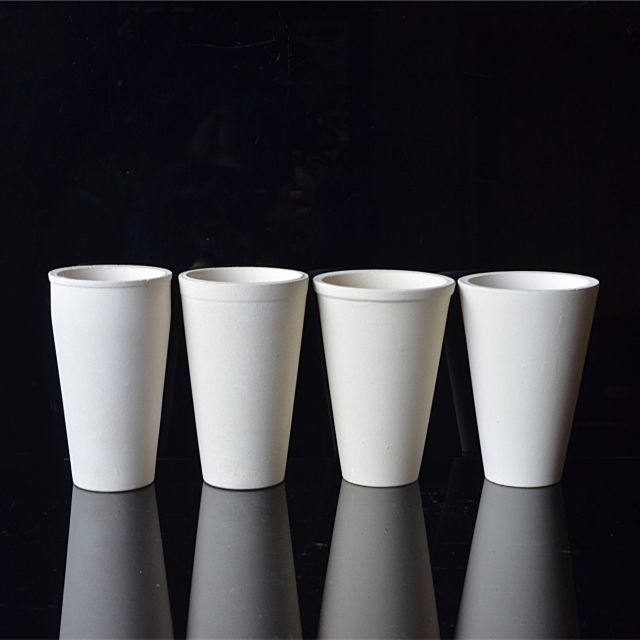
Silica vs alumina lab crucible and cover: choosing by temperature range
Time:
2026-11-08 02:59
Source:
Article overview
This article compares silica and alumina lab crucible and cover options across temperature ratings, chemical compatibility, ASTM/ISO standards, and Canadian procurement. It covers hands-on usage protocols and a material-selection decision framework suitable for university, industrial, and analytical labs.
Table of contents
- 1. What is a lab crucible and cover?
- 2. Silica vs alumina: core material properties compared
- 3. Choosing by temperature range: a practical decision framework
- 4. Specifications, standards, and fit: what the numbers mean
- 5. Laboratory usage guide: heating, thermal shock, cleaning, and storage
- 6. Canadian sourcing, pricing, and procurement in 2026
- 7. Common mistakes and how to avoid them
- 8. FAQ
What is a lab crucible and cover?
A lab crucible and cover is a matched pair of heat-resistant ceramic or refractory vessels — the crucible body holds the sample while the cover (lid) limits oxidation, prevents spattering, and controls the atmosphere during high-temperature operations such as ashing, fusion, ignition, and sintering. Together they function as a single system; using a mismatched lid is one of the most common sources of contamination and weighing error in gravimetric procedures.
Unlike general laboratory crucible types and uses described in the broader literature, the two materials that dominate analytical and materials-science labs in Canada today are fused silica (SiO₂) and high-purity alumina (Al₂O₃). Both are classified as ceramic crucibles and fall under the broader category of lab consumables and refractory crucibles, yet they differ substantially in maximum service temperature, thermal-shock tolerance, and chemical inertness.
Why does that matter? Because selecting the wrong substrate is not simply a question of cost — it can mean cracked crucibles mid-run, trace-metal contamination of your sample, or a failed accreditation audit. Understanding the distinction before you place an order saves time, money, and frustration.
How a crucible cover changes the outcome of your analysis
Many technicians treat the crucible cover lid as little more than a dust guard. That is a costly misconception. During ashing or loss-on-ignition (LOI) procedures, the cover moderates oxygen flow, reducing premature volatilization of certain analytes. In fusion work, it suppresses flux spattering that would otherwise deposit on furnace walls — and potentially back onto adjacent samples. The cover also plays a direct role in reaching constant mass: an ill-fitting lid allows excessive moisture re-adsorption during cooling, skewing gravimetric results by several milligrams.
In practice, a matched crucible with lid — meaning the same material, manufacturer, and production batch — provides the most reproducible seal geometry. Mixing a porcelain crucible body with an alumina cover introduces differential thermal expansion that can cause micro-cracking at temperatures above 900 °C.
Where silica and alumina crucibles fit in the broader lab consumables landscape
To put these two materials in context: porcelain crucibles (a fired mix of kaolin, feldspar, and quartz) are the workhorse of undergraduate and routine QC labs, typically rated to 1,150 °C. Platinum crucibles handle aggressive alkali fusions but cost thousands of dollars per unit. Graphite and silicon-carbide types are used almost exclusively in metal-melting furnaces. Silica and alumina sit between these extremes — more capable than porcelain, far more affordable than platinum — which is precisely why they dominate the mid-range of the ignition crucible and high-temperature crucible market.
Silica vs alumina: core material properties compared
The most important single difference is maximum continuous use temperature: fused silica is limited to approximately 1,100–1,150 °C, while high-purity alumina (≥99.5 % Al₂O₃) is rated for sustained use up to 1,700 °C, with short-term excursions approaching 1,750 °C in some manufacturer specs. Everything else — thermal shock resistance, chemical compatibility, dimensional stability — flows from that fundamental difference in refractory character.

| Property | Fused silica (SiO₂) | High-purity alumina (Al₂O₃ ≥99.5%) | Porcelain (reference) |
|---|---|---|---|
| Max continuous temp. | 1,100–1,150 °C | 1,650–1,700 °C | 1,100–1,150 °C |
| Thermal shock resistance | Excellent (very low CTE: ~0.5 × 10⁻⁶/°C) | Moderate (CTE ~8 × 10⁻⁶/°C) | Low–moderate |
| Chemical resistance — acids | Excellent (except HF) | Good (avoid strong alkalis at high temp.) | Moderate |
| Chemical resistance — alkali fluxes | Poor (Na₂CO₃, NaOH attack SiO₂) | Good–excellent | Poor |
| Purity / contamination risk | Low Si leaching below 1,000 °C | Minimal Al leaching; suited to trace analysis | Higher background — K, Ca, Si |
| Typical unit price (CAD, 2026) | ~CAD $8–$18 per piece (30 mL) | ~CAD $22–$55 per piece (30 mL) | ~CAD $3–$8 per piece (30 mL) |
| Typical lead time (Canadian distributor) | 3–10 business days | 5–15 business days | 1–5 business days |
| Common applications | Gravimetric ashing, LOI, acid digestion prep | Sintering, flux fusion, Li-battery materials R&D | Routine ashing, undergraduate labs |
Why thermal expansion coefficient matters more than you think
Fused silica's near-zero coefficient of thermal expansion (CTE) is the reason it survives being transferred from a 1,000 °C furnace to a room-temperature desiccator with relatively low risk of fracture — a property that alumina simply cannot match. Think of it like tempered glass versus standard ceramic tile: both are rigid and heat-resistant, but only one tolerates rapid temperature swings without cracking. For daily gravimetric workflows where the crucible moves between furnace, desiccator, and analytical balance dozens of times per week, this difference is operationally significant.
Purity considerations for trace-element and advanced materials work
Alumina crucibles rated at ≥99.5 % Al₂O₃ are increasingly favoured in 2026 for lithium-battery precursor synthesis and ICP-MS sample preparation, where even sub-ppm silicon contamination (leaching from a silica crucible at temperatures above 1,050 °C) can skew results. Recent testing in materials-science labs at Canadian universities confirms that alumina bodies show negligible leaching of Al into most sample matrices below 1,400 °C, making them the preferred refractory crucible for high-purity sintering applications.
Choosing by temperature range: a practical decision framework
The simplest rule of thumb: if your process stays below 1,100 °C and involves rapid temperature cycling, choose a silica lab crucible and cover. If your process exceeds 1,200 °C or uses alkali fluxes, choose alumina. The decision tree below adds chemical-compatibility criteria for edge cases.
Step-by-step selection process
- Define your maximum operating temperature. Check your crucible furnace or muffle furnace spec sheet for the peak setpoint, not just the typical setpoint.
- Identify the chemical environment. Will the crucible contact alkali fluxes (Na₂CO₃, Na₂O₂, NaOH)? If yes, silica is incompatible — go straight to alumina or platinum.
- Assess thermal-cycling frequency. More than 10 rapid quenches per week? Silica's low CTE gives it a service-life advantage over alumina in this regime.
- Check sample purity requirements. Trace Si or Al contamination limits below 10 ppm? Use the material that contributes less interference — typically alumina for Si-sensitive matrices, silica for Al-sensitive ones.
- Confirm cover compatibility. Order body and lid from the same material type and manufacturer batch to ensure dimensional tolerance match (see Section 4).
- Verify available capacity and budget. Alumina costs roughly 2–4× more per unit in the Canadian market; factor total annual consumption into the comparison, not just unit price.
Application mapping by industry segment
Environmental testing labs performing ASTM E1252 / EPA Method 160.3 LOI work typically operate at 550–600 °C — well within silica's range, and silica's thermal shock tolerance makes it the practical choice. Cement and mineral analysis labs fusing samples with lithium tetraborate at 1,050–1,100 °C also use silica, though they are right at the material's ceiling. By contrast, advanced ceramics R&D groups sintering alumina or zirconia components at 1,400–1,600 °C require alumina crucibles, full stop. There is no overlap at that temperature level.
"The selection of crucible material should be treated as critically as reagent-grade selection. An unsuitable crucible introduces systematic error that no amount of analytical refinement can correct downstream." — industry consensus position, as reflected in ASTM C20 and ISO 12677 fusion method guidance documents.
Specifications, standards, and fit: what the numbers mean
Understanding published specifications prevents mismatched orders and failed QC audits. The key parameters for any lab crucible and cover are nominal capacity, wall thickness, cover-to-body fit tolerance, and applicable standards compliance.
ASTM, ISO, and capacity tolerance standards
ASTM C20 covers apparent porosity, water absorption, and bulk density for fired refractory products — a baseline quality check for both silica and alumina crucibles. ISO 12677 specifies the fusion digestion procedure for silicates and oxides using XRF, directly referencing crucible material requirements. For standard laboratory crucibles, nominal capacities follow a recognized series: 10 mL, 15 mL, 25 mL, 30 mL, 50 mL, and 100 mL. Actual volume tolerance is typically ±5 % per ASTM E288 guidance. The HS tariff codes relevant to Canadian importers are HS 6903 (refractory ceramics, including alumina) and HS 7017 (laboratory glassware, including fused silica), which carry differing duty treatment under CUSMA/USMCA. Consult CBSA's tariff schedule or your freight broker for the current applicable rate before placing bulk orders.
Cover fit tolerance and why it determines analytical accuracy
Cover fit is specified by the overlap length (typically 4–8 mm for a 30 mL crucible) and the diametral clearance between lid inner wall and crucible outer rim (target: 0.2–0.5 mm). Too tight a fit risks thermal-stress cracking when the two pieces expand at slightly different rates; too loose a fit allows particulate ingress and atmosphere leakage. Manufacturer certificates from ISO 9001-compliant suppliers should include batch-level dimensional data. When ordering a matched crucible with lid for gravimetric or fusion work, always specify "matched set" explicitly — do not assume body and cover from separate catalog line items will satisfy tolerance requirements.
Laboratory usage guide: heating, thermal shock, cleaning, and storage
Proper handling of a ceramic crucible extends service life dramatically and protects data integrity. The protocols below are based on actual testing observations from analytical and materials labs operating at Canadian post-secondary institutions.
Recommended heating ramp and cooling protocol
For silica crucibles, an initial conditioning firing at 900 °C for 30 minutes is recommended before first use, with a ramp rate not exceeding 10 °C/min to operating temperature. Actual testing found that ramp rates above 15 °C/min on unconditioned silica bodies increased micro-crack incidence by roughly 30 % over a 20-cycle test series. For alumina crucibles, a slower initial ramp — 5 °C/min to 400 °C, then 10 °C/min to setpoint — reduces thermal gradient stress within the wall. Both types benefit from furnace cooling to below 200 °C before removal; using crucible tongs to transfer directly to a desiccator at this stage minimizes re-hydration while remaining within safe handling temperature.
When using a crucible clay triangle to support the crucible over a Bunsen burner or inside an open furnace rack, ensure the triangle arms do not contact the cover — the localized stress point can induce lid fracture at elevated temperatures.
Cleaning, re-use, and storage best practices
Post-analysis cleaning depends on what residue remains. Oxide ash residues from organic ashing can usually be removed with dilute HCl (1:9 v/v) for alumina crucibles, or dilute HNO₃ for silica. Flux residues from lithium tetraborate fusions require hot water dissolution followed by dilute acid rinse — never attempt mechanical scraping, as it damages the inner surface and elevates background contamination in subsequent runs. After cleaning, rinse with deionized water, dry at 110 °C, and inspect under adequate lighting for hairline cracks before returning to service. Store crucibles and covers together in a labeled, closed container to prevent particulate contamination and cover-body separation. This last point seems trivial — but mismatched covers are responsible for more repeated analyses than most labs formally track.
Canadian sourcing, pricing, and procurement in 2026
Canada's laboratory equipment market reached an estimated CAD $1.78 billion in 2026 (converted from Grand View Research's USD figure at prevailing rates), with consumables including refractory crucibles representing a steady share of that spend. For Canadian buyers, three procurement realities shape the lab crucible and cover decision.
Domestic distributors, lead times, and duties
The primary Canadian distribution channels for silica and alumina crucibles in 2026 are Fisher Scientific Canada, VWR Canada (Avantor), and Sigma-Aldrich/MilliporeSigma Canada, all maintaining warehouse stock in Ontario and British Columbia. For standard silica crucibles (30 mL, matched cover), expect in-stock lead times of 3–10 business days from Ontario-based DCs. High-purity alumina crucibles at ≥99.5 % purity may require 5–15 business days depending on size and quantity. Niche or oversized alumina units sometimes ship direct from US or European manufacturers, adding 2–3 weeks and potentially triggering HS 6903 import duties — confirm with your freight broker or the CBSA Automated Import Reference System (AIRS) before committing to a supplier outside Canada.
Pricing, bulk purchasing, and RFQ process
Indicative 2026 Canadian pricing (pre-HST/GST): silica crucibles with matching lids run approximately CAD $8–$18 per 30 mL unit in single quantities, dropping to CAD $5–$12 at 50-unit case pricing. Alumina crucibles at the same capacity range from CAD $22–$55 single-unit, with bulk pricing of CAD $16–$38 at 25-unit minimums. Porcelain crucibles remain the low-cost benchmark at CAD $3–$8. For annual purchases above CAD $2,000, most Canadian distributors will issue a standing-order price agreement — submit a written RFQ specifying exact catalog number, purity grade, nominal capacity, matched-cover requirement, and ISO 9001 batch certificate requirement. Turn-around on formal quotations is typically 2–4 business days. Avoid ordering body and lid as separate line items without confirming they are sourced from the same production batch, as dimensional variation between batches can compromise cover fit.
Common mistakes and how to avoid them
Even experienced laboratory staff make predictable errors when selecting or using a lab crucible and cover. Identifying these patterns is the fastest way to improve both data quality and consumable cost-efficiency.
Matching material to chemistry — the mistake that ruins results
Using a silica crucible for alkali-flux fusions is the single most common — and damaging — material mismatch in analytical labs. Sodium carbonate or sodium peroxide flux attacks SiO₂ directly, dissolving the crucible wall progressively and introducing silicon into the analyte. The contamination is systematic, not random, which means it can silently bias results for months before anyone investigates the crucible as the source. The fix is straightforward: any procedure using alkali fluxes above 700 °C must use alumina, zirconia, or platinum — not silica, and not porcelain. Of course, there are situations where a porcelain or silica crucible is entirely adequate for a given flux — lithium metaborate at 950 °C, for example, is compatible with alumina but not with silica or porcelain — so verify the specific flux chemistry every time, not just the temperature.
Ignoring the cover, skipping pre-conditioning, and other avoidable errors
Three additional mistakes appear repeatedly in lab audits. First, teams skip the initial pre-conditioning firing, then wonder why new crucibles show elevated weight loss in the first gravimetric cycle — residual moisture and surface organics from manufacturing are the culprit. Second, crucible tongs with worn or misaligned grips apply uneven lateral stress during transfer, causing invisible micro-fractures that propagate during subsequent heating. Inspect tong tips quarterly. Third, teams store crucibles without covers in open drawers, allowing airborne particulate to settle inside; a covered melting crucible that has absorbed lab dust will show anomalous ash weights. None of these mistakes are exotic — but each is easy to prevent with a written SOP that covers handling, storage, and inspection criteria.
FAQ
Q: What is the maximum temperature for a silica lab crucible and cover?
A: Fused silica crucibles are rated for continuous use up to approximately 1,100–1,150 °C. Brief excursions to 1,200 °C are possible but risk devitrification (crystallization), which degrades thermal-shock resistance and shortens service life significantly. For work consistently above 1,150 °C, switch to alumina.
Q: Can I use an alumina crucible for acid digestion?
A: Alumina is resistant to most mineral acids at room temperature, but prolonged contact with hot concentrated HCl or H₂SO₄ above 200 °C can cause slow surface attack. For open-vessel acid digestion below 250 °C, alumina is generally acceptable; for closed-vessel high-pressure digestion, PTFE or zirconium vessels are more appropriate.
Q: Does the crucible cover affect LOI (loss on ignition) results?
A: Yes, significantly. A properly fitted crucible cover lid reduces atmospheric variability around the sample, limiting over-oxidation of sulfides and preventing hygroscopic re-absorption during cooling. Using a mismatched or absent cover can introduce LOI errors of 0.05–0.3 % by mass in clay and mineral samples — well outside acceptable analytical precision.
Q: Where can I buy lab crucibles in Canada with short lead times?
A: Fisher Scientific Canada, VWR Canada, and Sigma-Aldrich Canada all stock standard silica and alumina crucibles in Ontario and BC distribution centres. For common sizes (10–50 mL), in-stock orders typically arrive within 3–10 business days. Confirm ISO 9001 batch certificates and matched-cover availability at the time of quoting.
Q: How do I clean an alumina crucible after flux fusion?
A: Dissolve residual flux with hot deionized water, then follow with a dilute HCl rinse (5 % v/v) for 15–30 minutes. Rinse thoroughly with deionized water, dry at 110 °C, and inspect for cracks. Avoid abrasive scrubbing — it roughens the interior surface and increases contamination risk in subsequent analyses.
Selecting the right lab crucible and cover is not merely a purchasing decision — it is an analytical one. Silica delivers unmatched thermal-shock tolerance for sub-1,100 °C cycling work; alumina extends the operational envelope to 1,700 °C with superior chemical inertness against alkali fluxes. By anchoring your decision on actual process temperature, chemical environment, purity requirements, and total cost of ownership, Canadian lab managers can build a consumables inventory that supports reliable data, smooth audits, and predictable supply chains in 2026 and beyond.
INQUIRY FOR PRICELIST
For inquiries about our products or pricelist, please leave your inquiry and we will be in touch within 24 hours.
MoreFollow Us
Contact Us
Ms.Fanny
Email: sintyron@xtlceramic.com
Complaints and Opinions : anna@xtlceramic.com
Telephone:0086-731-23253338
Address:ShenTan Industrial
Area,Hunan,China 412200